


Canada aims to streamline student visa processing




Canada is accepting more and more international students, and more of those international students are deciding to immigrate – recent data from Citizenship and Immigration Canada (CIC) shows. CIC is also rolling out new initiatives to help improve visa application processing times for international students.
China and India are top source countries for Canada
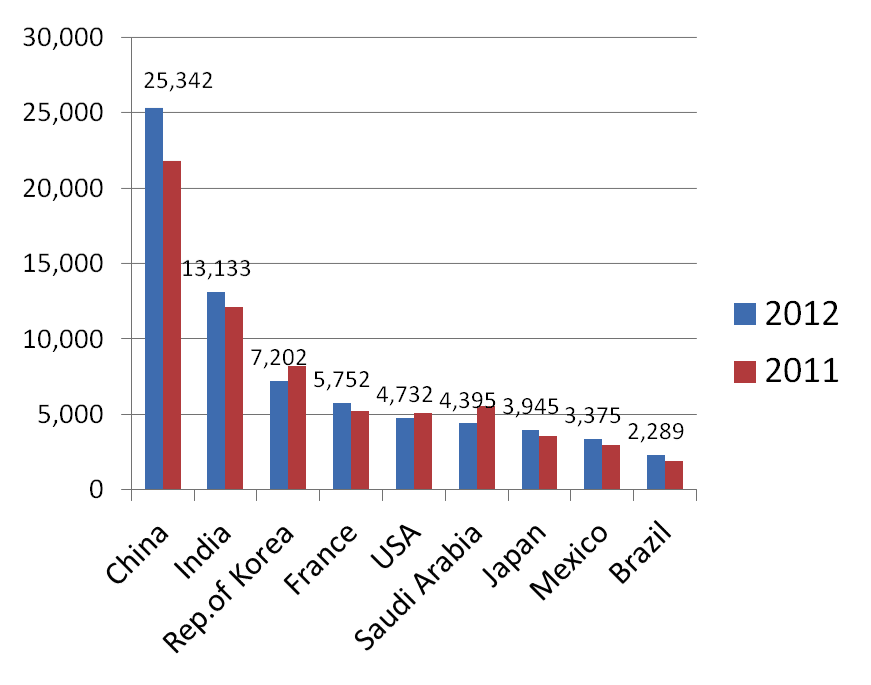
In 2012, 104,777 new study permit holders entered Canada, up from 79,264 in 2008 – for a 32% increase over those four years. The total number of international students in Canada has also risen, from 177,657 in 2008 to 265,377 in 2012, for a 50% increase over the same period. The Province of Ontario accepts the most international students (45,401 out of the 104,777 new arrivals in 2012), followed by British Columbia (26,639) and then the French-speaking province of Quebec (16,770). Universities claim the highest numbers of international students in Canada (41% of new arrivals in 2012), with “other post-secondary” (e.g., colleges, polytechnics, and CÉGEPS) coming in at 25%, and K-12 at 23% of the Canadian total. The top ten source countries for Canada, representing nearly 70% of annual entries into the country, are:
- China
- India
- Republic of Korea
- France
- US
- Saudi Arabia
- Japan
- Mexico
- Brazil
Students from China and India together represented 37% of the international student entries to Canada in 2012.
More international students choosing to immigrate to Canada
CIC noted in a recent presentation at the 2013 ICEF North America in Toronto that “the number of former students choosing to immigrate is increasing” and acknowledged the “growing importance of post-graduation employment.” Growth is driven by demand; there are no international student quotas. The Canadian Experience Class is one of the key streams through which international student graduates are entering; since 2008, more than 6,000 students have attained permanent residence status through the Canadian Experience Class. CIC notes that there is an 84% approval rate for Canadian Experience Class applicants.
Visa office closures offset by new online services and VACs?
Faced with budget constraints and with a strong mandate to improve processing efficiency, CIC has decided to close visa offices in a number of countries over the last couple of years. The following table documents those closures, as well as the rerouting procedures used to compensate:

On average, 81% of all study permit applications to Canada were approved in 2012, and 80% of applications were finalised within 42 days.
Citizenship and Immigration also notes that processing times are considerably shorter - on average, 45% shorter in fact - for those students applying online, which is now much easier due to new online services that have been introduced in recent months:
- In November 2012, CIC launched an online Help Centre offering information on over 500 popular topics and designed to facilitate online client self-service;
- In December 2012, CIC launched a global electronic application service for temporary residents, including visitors, students, and temporary workers.
- The eMedical initiative was also launched in December, allowing physicians to submit medical results online to be integrated with the applicants' electronic files.
CIC also anticipates that its plan to increase the number of Visa Application Centres (VACs) around the world will further help to improve service to international students wanting to study in Canada. As distinct from Government of Canada visa offices within Canadian embassies or consulates, VACs are managed by private companies or international organisations and are authorised to provide specific services to applicants under a formal agreement with CIC. Currently, there are 67 VACs in 47 countries; the plan is to expand this network to over 130 locations in 95 countries. Of the plan to expand VACs, Citizenship, Immigration and Multiculturalism Minister Jason Kenney has said:
“Our goal is for there to be a global VAC network, one with worldwide coverage and services standardised across all locations. That way, no matter where you are in the world, you can expect the same service from all the VACs.”
As we reported recently, Canada is also part of the first five-country VAC in Singapore. For more on how VACs can help international students with Canadian study permit applications – as well as where they are in the world – see here. Suggesting that further service improvements are still to come, Canada’s expanded online visa application services and burgeoning VAC network are taking shape against the backdrop of the Canadian government’s having earmarked CDN $23 million in its latest budget to supporting its national international education strategy and CDN $42 million to improving visa processing for temporary residents including students. See our related article for more background on what steps Canada is taking to boost its competitiveness as a study abroad destination.
Most Recent
-
Offering reassurance to international students after they apply is increasingly key to securing enrolments Read More

-
Ireland’s ELT sector reports modest growth in student numbers but weeks are down amid “real and consequential” challenges Read More
-
Japan: Japanese proficiency essential for foreign graduates staying on to work Read More







