Is your institution doing enough to boost career outcomes for students?


- Very few international students will choose a university unless they have seen evidence that it emphasises not just academics, but also work opportunities
- This includes internships and co-op programmes as well as networking with industry employers
- Though many universities claim to offer strong career supports, not nearly as many back up their promises with comprehensive programmes
- Vague promises are no longer cutting it for prospective students – they will thoroughly research whether there is action behind the words
- We look at five examples of universities doing it right
Throughout this year, ICEF Monitor has covered the implications of students’ growing expectation that their university/college experience will provide a real edge in the workforce. That point is driven home by research such as IDP’s Emerging Futures survey conducted in March 2024, which found that students increasingly equate quality of education with graduate outcomes.

But students do not always know whether a higher education institution that promises “career-focused education” will truly deliver. David Pilsbury, Chief Development Officer at Oxford International Education Group, wrote a blog post for Universities UK on 3 October 2025 that argues that it is time to abandon “vague promises.” He writes about a TNE initiative in which he has been closely involved that bucks this trend: the University of Southampton’s new Delhi campus. Mr Pilsbury writes:
“This project … breaks the mould of ‘business as usual’ in transnational ventures. Instead of the usual rhetoric about employability, it hard-wires a commitment to real employment outcomes for students.”
Mr Pilsbury goes on to explain how the Southampton branch manifests this commitment:
“Thanks to partnerships with industry – for example an agreement with Deloitte India – students at the Delhi campus gain access to internships, placements and clear graduate job pipelines from day one. The campus is located in an innovation park amid major businesses, and curricula are specifically designed to prepare students for global careers. In practice, this means engaging industry experts in guest lectures and projects, and constantly updating programmes to match skills needed in the market …. Crucially, Southampton’s venture doesn’t operate in isolation – it integrates a ‘triple helix’ of education, research and industry engagement at its core. Students benefit from links to leading firms with internship and placement schemes already in place.”
The University of Southampton’s commitment to employability is admirable, and there are other universities that are similarly impressive in accompanying promises with strategy and infrastructure.
We have highlighted a few great examples below.
Experience for the win
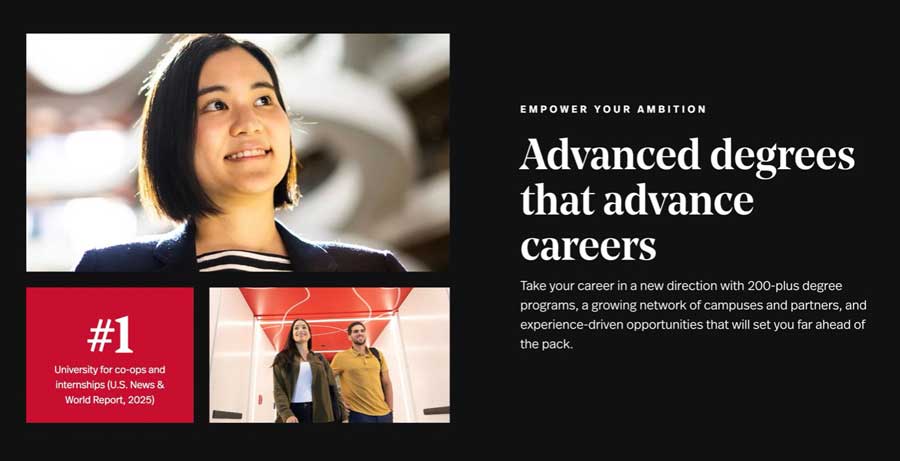
Northeastern University (US) is a pioneer of integrating workplace learning into academics. It is famous for its six-month co-op opportunities – mostly paid, and the university strongly encourages employers to compensate students – at the undergraduate and master’s levels. For example, business and law students can work with legal firms or multinationals including Deloitte and Microsoft to gain hands-on expertise. In fact, if you look at Northeastern’s homepage, you’ll see that “Experience” leads the branding in the university’s carousel-styled banner, followed by “Research” and “Global.”
Leading with excellence in work placements
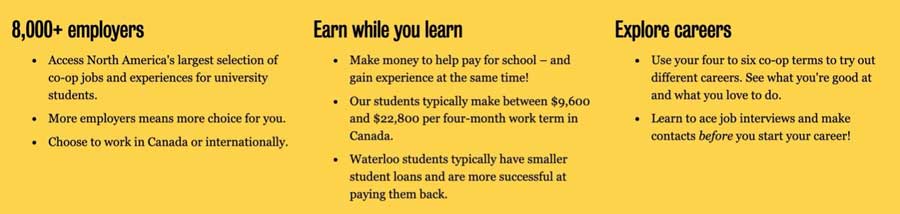
The landing page for Waterloo University says it all – and the message is directed right at students:
“Explore careers, earn money, and gain experience through the world's leading co-op (paid internship) program.
As a Waterloo co-op student, you’ll typically alternate between four months in school and four months as a full-time employee of the organization you're working for.
Open to Canadian and international students, Waterloo's co-op program is an amazing way to learn to successfully interview for jobs, test drive up to six careers, graduate with up to two years of valuable experience – and make money!”
Skills-demand forecasting for relevant programmes
As reported by Boston Consulting Group (in a fascinating article about preparing students for long-term success), The Royal Melbourne Institute of Technology (RMIT) "forecast the growth of digital jobs in Australia. The university then formed strategic partnerships with major employers to establish pathways and programs aimed at reskilling current students so that they can access these job opportunities.” This is an amazing example of following through on promises of academic–industry connections.

Beyond traditional career supports
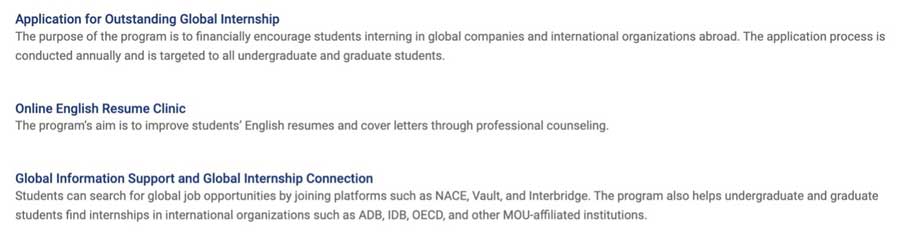
Check out Korea-based Seoul National University’s Career & Work page and you’ll need to scroll to see all the career supports the university provides. From courses to internships to job fairs and career “concerts,” the list is extremely impressive. There are even options specifically for international students and one focused on jobs in the global economy, complete with English-language coaching for resumes, interviews, and presentations.
Make it personal
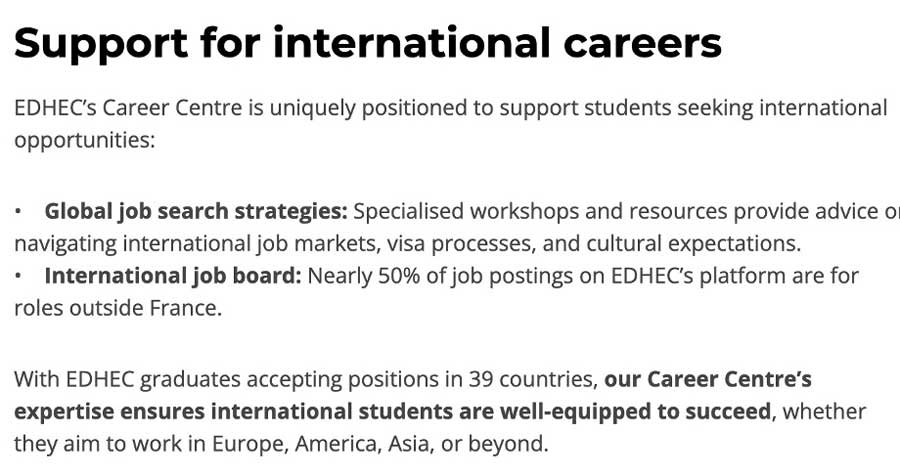
In France, the EDHEC Business School doesn’t just offer career services – it offers personalised career services for students focusing on one sector or profession. Their website says:
“One of the unique strengths of EDHEC’s Career Centre is its specialised teams that focus on specific tracks and industries. Whether students are pursuing finance, marketing, consulting, or data, they receive expert support tailored to the demands of their chosen field. This ensures precise alignment between academic preparation and market needs.
The Career Booster programme offers sector-specific training, recruitment preparation, and networking opportunities. With 30 sectorial career boosters, students can focus on industries like luxury goods, fintech, consulting, entertainment, and more, ensuring they stand out in a competitive global job market.”
Within the Career Booster initiative is an Assessment Centre that “simulates real-world recruitment processes. Students participate in tests, group exercises, and case studies, receiving immediate feedback from industry experts. Each year, our students benefit from this immersive preparation, entering the job market with confidence.”
Lifelong career support
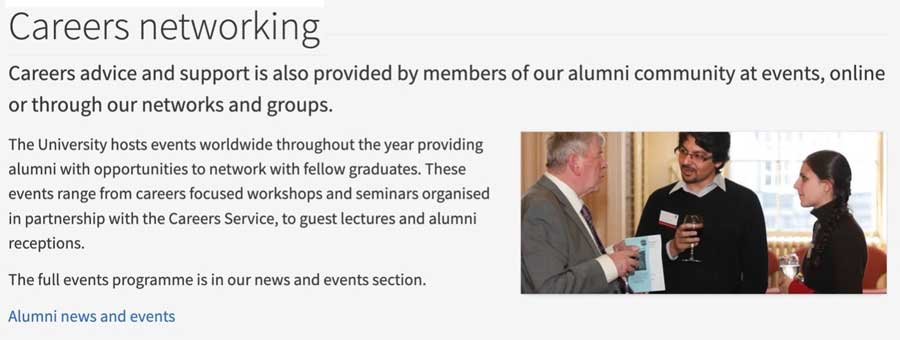
The University of Edinburgh (UK) recognises the importance of supporting students long after they leave the institution – and even after they get their first job. The university offers lifelong career support to its alumni through its Careers Service and the Alumni Services platform. This includes access to online resources and advice, careers events, networking opportunities, and individual counselling support.
Back it up
The five universities profiled here offer a glimpse of best practices in career services as well as a real commitment to graduate outcomes. Increasingly, developing more comprehensive, strategy-based, labour-market connected career supports represents a huge competitive edge – and one that should be surfaced not just on landing pages, but on the institutional homepage as per the Northeastern example. If they are the real deal – and not just a claim – experiential learning and graduate outcomes can be the strongest element of a brand.
For additional information, please see:
Most Recent
-
Global agent survey provides an early indication of how international student markets are taking shape this year Read More

-
Amidst high visa refusal rates and falling commencements, Australian government opens consultation on reforms to Genuine Student test and financial requirements Read More
-
English UK spearheads effort to strengthen protections for language students affected by school closures Read More