


First approved pilot aims to bring hundreds of Asian students to South Australia




- A new Australian pilot will allow roughly 300 Asian students to return to universities in Adelaide
- The pilot is viewed as a test of Australia’s safety protocols around COVID-19 and the utmost caution will be used in order to prevent the coronavirus from entering South Australia, a state where the outbreak is currently well controlled
- Students and universities will bear the cost of travel and quarantine
About 300 Asian students will return to Australian universities this September as part of a pilot programme intended to be a step towards revitalising the country’s international education sector. Australian universities collectively face losses of approximately AUS$3 billion as a result of the travel restrictions necessitated by the coronavirus this year, and the return of Chinese and Southeast Asian students would do much to stem the tide.
The students in the pilot – mostly from China, Hong Kong, Japan, and Singapore – will return to universities in Adelaide as part of a test to see if stringent safety protocols will prove so effective that more international students will then be able to return to universities nationwide. Trade, Tourism and Investment Minister Simon Birmingham calls the South Australian pilot “a very important next step in terms of the recovery from the economic disaster of COVID.”
In the state of South Australia alone, international students normally contribute more than AUS$1.9 billion in direct economic impact.
Costs borne by students and universities
The students will fly from Singapore and will be responsible for the cost of their travel. As part of a set of agreed safety procedures, they will also be required to self-quarantine for two weeks. Their universities have agreed to pay for the costs of the quarantine. Minister Birmingham says the utmost caution will be used for the arrival and quarantine process:
“We have successfully demonstrated, particularly states like South Australia, that they can return Australians from all corners of the world, safely quarantining them, and provide no exposure to the South Australian community in that process, so the same cautious and careful approach is being brought to bear when it comes to international students."
He continued:
"All of the quarantine requirements, all of the testing requirements, all of those factors are built in with this having been approved at the highest level — state and federal, by health authorities — to make sure that everyone can have confidence this is not going to pose any risk in terms of COVID transmission."
Is 14 days enough?
On days 1 and 12 of quarantine, students will be tested for COVID-19, as is standard practice for all people returning to Australia from abroad. But the recent case of an Indian man who tested positive in early August for COVID-19 on day 12 of his quarantine has made some Australians nervous. There have been questions raised about whether 14 days of quarantine is a long enough period of time to see if a returning traveller will end up testing positive.
But South Australia’s deputy chief public health officer Dr Michael Cusack notes that 14 days is the international standard for COVID-19 quarantine, and says that, “alongside just having quarantine, we’ve put in the day one and the day 12 test just to give that extra piece of assurance that even, obviously if someone has very few symptoms as in this case, that we still pick up someone who may be shedding the virus.”
He adds, “I think we’ve got the balance just right.”
Low case count sets the stage
South Australia currently has just seven active cases of coronavirus, a much better situation than in the neighbouring state of Victoria, which is again under lockdown as it struggles to contain a surge in cases and a second wave of the virus in recent weeks.
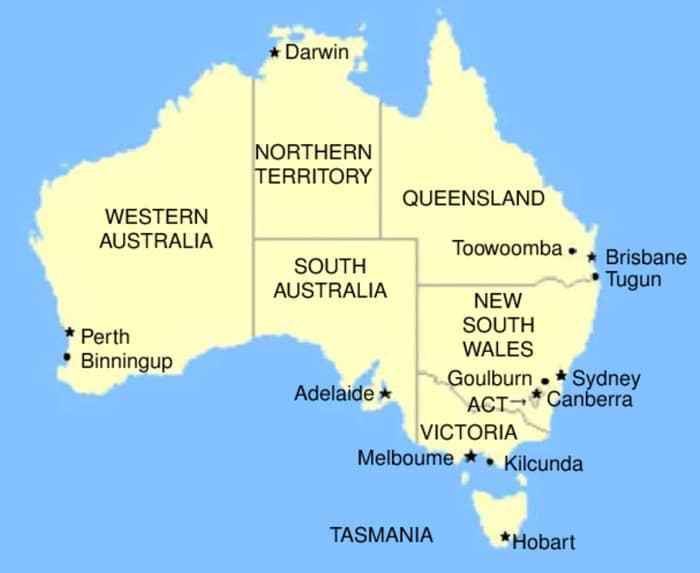
A previous pilot effort to bring international students back to the national capital of Canberra was shelved in July after infection rates spiked in some Australian states, including Victoria and, to a lesser extent, New South Wales.
For additional background please see:
Most Recent
-
Offering reassurance to international students after they apply is increasingly key to securing enrolments Read More

-
Ireland’s ELT sector reports modest growth in student numbers but weeks are down amid “real and consequential” challenges Read More
-
Japan: Japanese proficiency essential for foreign graduates staying on to work Read More







