New Zealand: Foreign enrolments climbed steadily through 2023 but full recovery will take years




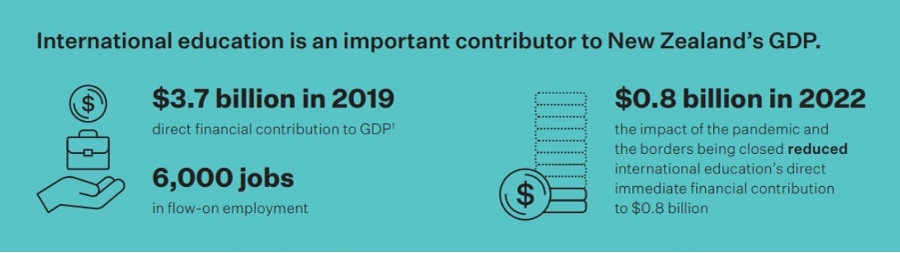
- An analysis commissioned by Education New Zealand (ENZ) reveals that the international education sector’s economic impact reached NZ$3.9 billion in 2019 – but plummeted to NZ$800 million in 2022 when New Zealand’s border remained closed in the latter stages of the COVID-19 pandemic
- International enrolments have been climbing since the border’s reopening, and the New Zealand government is strongly supportive of the sector regaining its pre-pandemic scale
While all study abroad destinations felt the economic bite of losing international students in the pandemic, New Zealand offers a particularly stark and revealing case study. This stems from New Zealand’s border having been closed from March 2020 until the end of July 2022 – a much more extensive period of time than in Canada, the UK, or the US, and even longer than Australia’s shutdown (March 2020 to a full opening in February 2022).
The longer New Zealand’s border remained shut, the more prospective international students grew discouraged. Many got tired of waiting, choosing less preferred destinations out of necessity. A new analysis shows that the situation more than halved the value of New Zealand’s higher education sector between 2019 and 2022.
From billions to millions
Education New Zealand (ENZ), the government agency responsible for promoting New Zealand education abroad, asked the research firm EY to conduct an analysis of the economic impact of international students in 2019 and 2022. In 2019, the direct value of the international education sector was NZ$3.9 billion (US$2.4 billion), and the presence of international students created 6,000 jobs. In 2022 – the last year of the border closure – the sector’s value had dropped to NZ$800 million (US$488 million).
Once New Zealand’s fourth largest export sector, the industry’s pandemic losses were felt across the entire economy.
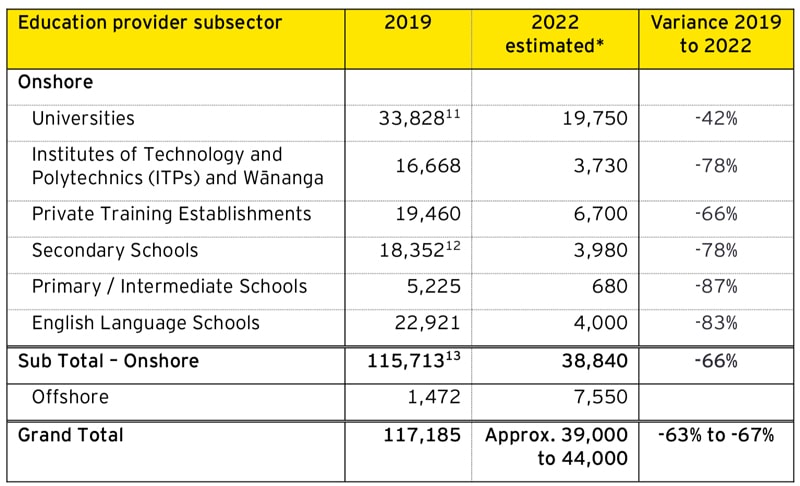
The EY report also provides the following summary of actual international enrolments by education sector as of 2019 and estimated enrolments for 2022.
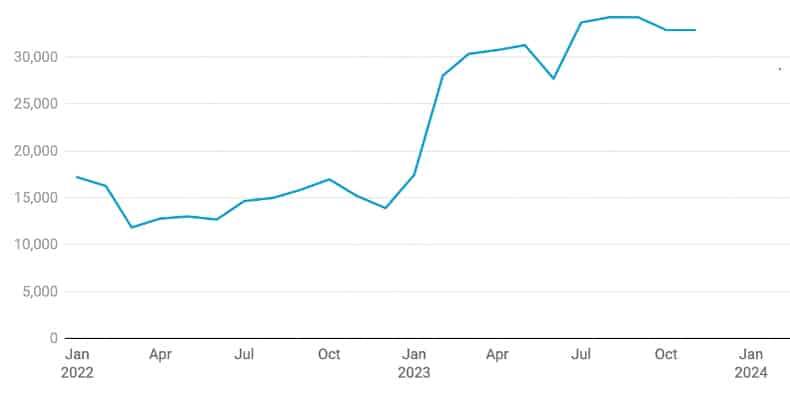
Those estimates for 2022 line up reasonably well with data reported recently by national newspaper The Post. As the following chart reflects, enrolments recovered steadily through 2023. From a low of 11,820 in May 2022, they climbed to 34,230 by August 2023 before settling at 28,725 in February 2024
Top student source markets and sub-sectors
China, India, and Japan are the top 3 markets for New Zealand educators – as they were before the pandemic. The majority of international students in New Zealand are in universities (11,145), with thousands more spread between private training establishments (6,895), polytechs (4,165), and schools (6,477). There are still more students in short courses, and students with visa-free status were not included in the total count.
An optimistic outlook
EY believes that by 2030, New Zealand’s international education sector could regain its pre-pandemic footing in terms of enrolments and value. In December 2023, New Zealand immigration officials had received 7,265 new student visa applications, similar to the volume received in December 2022 (7,481). This year, the mean visa processing time has been about 26 week days.
The full recovery of the sector is strongly supported by the current New Zealand government. National’s Tertiary Education spokesperson Penny Simmonds said in September 2023:
“New Zealand has been in recession, the cost of living continues to rise faster than wages, and mortgages are unaffordable. We need to get sectors that can provide much-needed export earnings like international education back on their feet as soon as possible.
Supporting international education to recover will boost export revenue, create job opportunities, and strengthen global connections that will drive economic growth in New Zealand.
Reviving international education is also vital for our tertiary education institutions. The revenue raised from higher international fees allows our universities, polytechnics and other tertiary institutions to provide better quality education and services while keeping costs down for domestic students.
National will make a series of sensible changes to make New Zealand a more attractive destination for international students.”
A range of benefits
ENZ asked EY to measure not just the direct economic benefits of international students, but also their broader impact on New Zealand society. If labour supply and productivity is factored in, the total contribution of international students to New Zealand’s GDP is about NZ$6 billion.
Of the research conducted by EY, ENZ’s Chief Executive, Grant McPherson, says: “This report confirms the tough time the sector has had over the past two years, highlights the contribution it made in the past, the contribution it makes beyond economic value, and tells us that it is possible to become a vibrant, sustainable and resilient sector in the future.”
Student survey shows international students are happy to have chosen New Zealand
ENZ conducted a survey of 4,755 international students from more than 70 nationalities in 2023. The International Student Experience survey found that 84% were positive about their experience, and 83% said they would recommend New Zealand as a study destination. Other highlights include:
- 87% said their study experience helped encourage their curiosity and develop new ideas;
- 88% said they felt positive about the people and connections they made in New Zealand;
- 78% said that New Zealand was their first-choice destination.
Separate research conducted by Ipsos found that 75% of 1,100 New Zealanders surveyed in December 2023 believe that international students benefit New Zealand – up from only 57% in 2016.
The New Zealanders surveyed in 2023 were especially positive about international students’ economic benefits (80%) and “international students help[ing] local students learn about other cultures and ways of living and contributing to New Zealand’s cultural diversity” (81%). A third of respondents, however, were concerned that “New Zealand’s infrastructure in housing, transport and medical services is not well equipped to allow for international students.”
ENZ’s Director Insights, Marie Clark, said the results from the domestic survey were overall positive:
“International students have always been a significant contributor to regional economies. It is particularly pleasing that there is strong awareness and support of the cultural exchanges that happen when international students learn alongside New Zealand students and participate in our communities. While the research identified some challenges, the definite trend in awareness of the benefits international students bring to New Zealand is very positive for the future.”
For additional background, please see:
Most Recent
-
Breaking: US Department of Homeland Security publishes rule to end Duration of Status for international students Read More

-
Joint sector alert sends a clear compliance message to Australian higher education and VET providers Read More
-
Academic support and learning resources in TNE: Delivering student success across borders Read More