
US suspends visa processing in Turkey




Diplomatic tensions between the US and Turkey have spilled into the open this week. On Sunday, 8 October, the US government took the extraordinary decision to suspend all processing of all non-immigrant visas in Turkey – effectively halting processing for all student visas along with other temporary visitor visa classes. Hours later, Turkey announced its own travel restrictions for US visitors with an announcement on Monday (9 October) indicating that it too would suspend visa processing at its diplomatic posts in the US.
The US government statement from 8 October said, “Recent events have forced the United States Government to reassess the commitment of the Government of Turkey to the security of US Mission facilities and personnel. In order to minimize the number of visitors to our Embassy and Consulates while this assessment proceeds, effective immediately we have suspended all non-immigrant visa services at all US diplomatic facilities in Turkey.”
The suspension follows the arrest last week of a Turkish national employed at the US consulate in Istanbul. The Turkish government alleges that the employee has ties to Fethullah Gülen, an exiled Turkish cleric and political figure who is in turn alleged to have been behind the failed 2016 coup attempt in Turkey.
Turkish officials have since ordered the question of another US consulate official as a suspect in an unspecified case.
The rhetoric has been hot on both sides in the early days of this week, but there have been signs too that cooler heads are starting to prevail. Speaking at a news conference while on a state visit to Ukraine on Monday, President Recep Tayyip Erdogan said, “Before anything else, this decision is very saddening. The implementation of a decision by the US ambassador in Ankara is very saddening. Turkey is a state of law, not a tribal state.”
US Ambassador John Bass explains the thinking behind the decision to suspend visa processing in the following 9 October video statement, in which he is careful to note that, “This suspension of services is not a visa ban on Turkish citizens; it is a suspension of our consideration of new visa applications. If you have a valid visa, you can still travel to the United States. If you want to apply for a visa at another US embassy or consulate outside of Turkey, you are free to do so.”
Ambassador John Bass’ statement on the suspension of visa services in Turkey
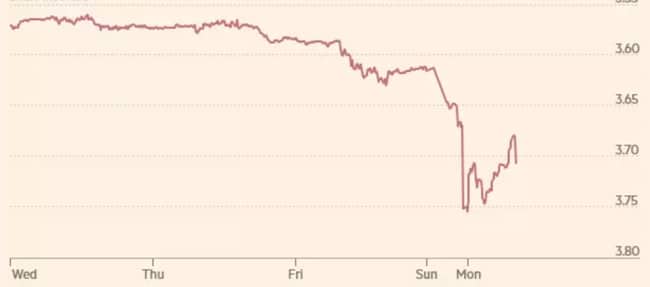
Just as these more recent statements reflect an attempt to prevent a further escalation of diplomatic tensions, currency markets began to correct late Monday after an initial “flash crash” for the Turkish lira. The Turkish currency was off sharply against the US dollar in overnight trading Sunday, and lost roughly 6% of its value almost immediately. There were signs of a market correction, however, as world markets recovered the following day from the initial surprise of the visa suspension.
US a key destination
The move to suspend visa services in Turkey hits close to home for Turkish students, families, and counsellors. The US remains a leading destination for Turkish students, and is generally noted as a second most-popular choice, after only the UK. The Institute of International Education has Turkey as the 13th-largest sending market for the US as of 2015/16, with just under 10,700 students enrolled that year. The question now will be how long the diplomatic face-off between these important sending and destination countries will last. If it subsides quickly, we can expect little disruption in the flow of students. A worse case scenario is if the suspension of visa processing drags on for weeks or months with no clear end in sight. In that event, Turkish students who had planned to study in the US as early as January 2018 will certainly be forced to delay their studies or consider an alternate destination. For additional background, please see:
Most Recent
-
US ELT weeks fell by nearly -8% in 2025 Read More

-
Report: International students already studying in the UK or offshore through TNE represent an increasingly important recruitment opportunity Read More
-
Japan: Greater availability of in-country English programmes is exerting some downward pressure on outbound mobility Read More