Japan and Europe increasingly important sending markets for Canada’s K-12 schools




- In 2021/22, there were close to 30,000 long-term international students studying in Canadian public schools
- Long-term enrolments are still down about 34% from their pre-pandemic peak, and short-term enrolments are recovering more slowly
- China is sending significantly fewer students, which is a major reason for the decline
- Japan, Hong Kong, and Europe are sending notably more students, and Japan is now the #1 sender of short-term students to Canadian public-schools
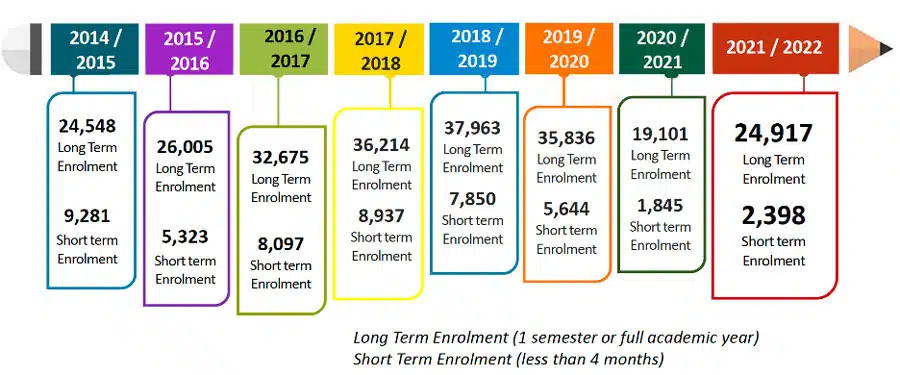
International student numbers in Canadian public schools are recovering from steep enrolment drops in the pandemic, according to new data from CAPS-I. Long-term enrolments (four months or longer) reached 24,915 in 2021/22, up from 19,100 the previous academic year. Short-term enrolments (less than four months) were up by 30% over the previous year but CAPS-I notes that these represent “a fraction of pre-pandemic numbers.” Students came to Canada from 131 countries in 2021/21.
Long-term enrolment trends
Peak numbers occurred in 2018/19 (37,970), so long-term international enrolments are still off by 34% from that record high. The relatively slow return to growth for the sector stems in large part from declines from China. China remains the top sender of long-term students to Canadian public schools, but the chart below shows that the flow of students from this market is decreasing – 2021/22 numbers are less than half what they were in 2018/19. Other top markets sending fewer students are South Korea and Vietnam.
Vietnam, like China, sent less than half the number of students in 2021/22 as in 2018/19. The decline here is troubling given that between 2016/17 and 2018/19, Vietnamese long-term enrolments had tripled.
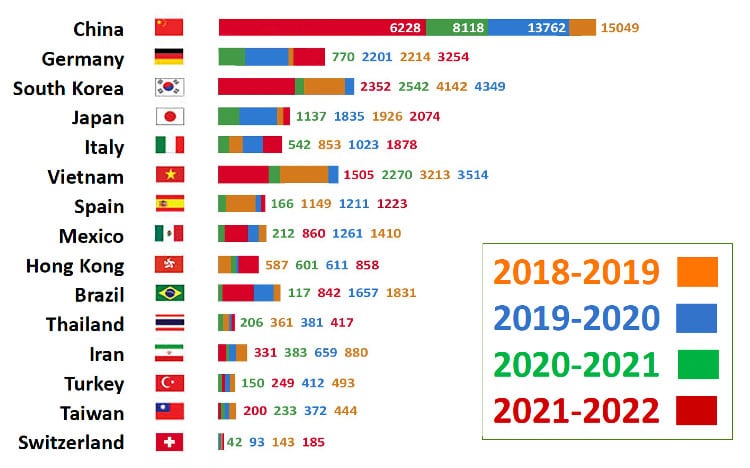
The public-school sector was buoyed by significantly more students coming from Japan, Hong Kong, as well as European countries.
Japanese enrolments reached a new high in 2021/22, and there were 40% more students from Hong Kong. Japan is now the fifth most important sender of students.
Germany sent 2,500 more students in 2021/22 than the previous year (for a total 3,254 – a record high). Italy sent 1,300 more students – twice as many as the pre-pandemic record. Spain, Turkey, and Switzerland are also current growth markets for Canadian public schools.
Short-term enrolment trends
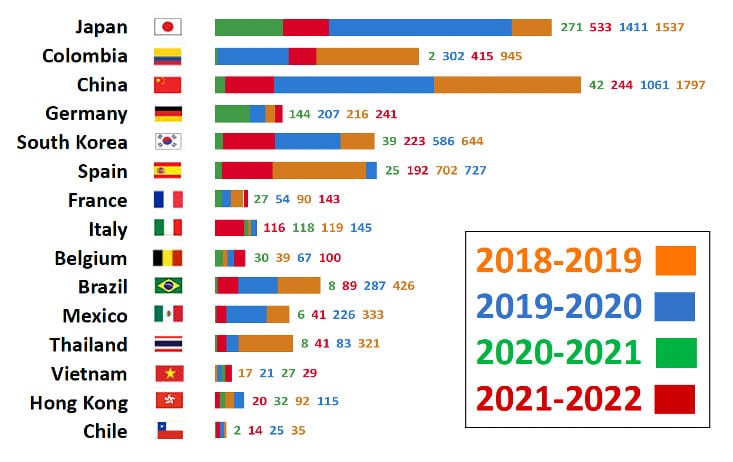
Japan sent more short-term students to Canadian public schools than China did in 2020/21, and so did Colombia. Germany and South Korea round out the top five sending markets for short-term students to Canada in 2021/22.
For additional background, please see:
Most Recent
-
Breaking: US Department of Homeland Security publishes rule to end Duration of Status for international students Read More

-
Joint sector alert sends a clear compliance message to Australian higher education and VET providers Read More
-
Academic support and learning resources in TNE: Delivering student success across borders Read More