
Ireland announces 24-month “stay back option” for international postgraduates




The Irish government has extended the period during which foreign graduates of masters and doctoral programmes may remain and work in the country after their studies. Under Ireland’s Third Level Graduate Scheme, international students completing advanced degrees may stay in Ireland to seek employment, work for up to 40 hours per week, and/or apply for a further work permit or green card.
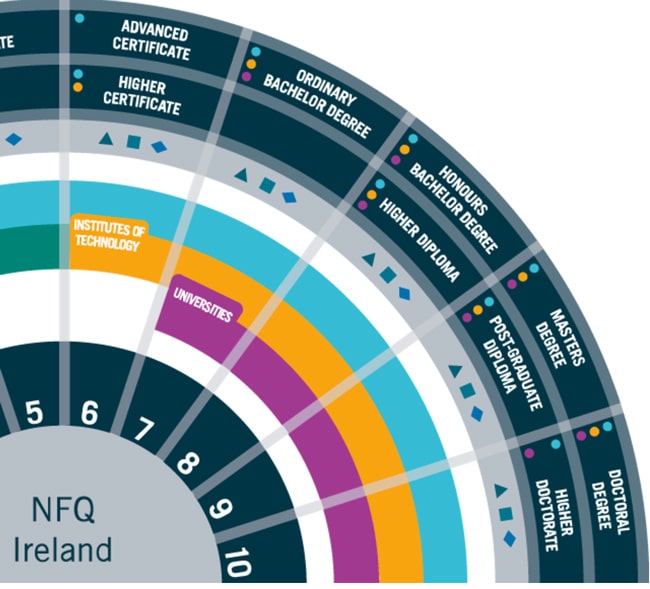
Up to this point, graduates from outside the European Union/European Economic Area were entitled to stay and work in Ireland for up to 12 months after graduation. But under the recently announced expansion of the programme, this term has now been extended to 24 months for those completing recognised degrees at either Level 9 (master’s degree or post-graduate diploma) or Level 10 (doctoral degree) of the Irish National Framework of Qualifications (NFQ). A notice on the Education in Ireland website confirms that, “This will allow eligible graduates who have studied in Irish higher education institutions and whose award is granted by a recognised Irish awarding body at masters or PhD level to remain in Ireland for two years to seek employment.”
Writing in the University Observer, the student newspaper of the University College Dublin, Chloe Maguire Sedgwick notes, “Previously for some employment sectors, the restriction of the working period for international students was a disincentive in hiring them. The new extension is welcomed as a way to fill the skills gap and to improve the employability of postgraduate students emerging from Irish higher education institutions.”
Non-EU/EEA students completing Level 8 programmes (honours undergraduate degrees) will continue to have a 12-month stay back option, whereas those completing a Level 7 qualification (ordinary undergraduate degree) will also remain eligible for a six-month stay back.
- A 33% increase in international enrolment in Irish higher education to reach 44,000 foreign students by 2019/20.
- A 25% increase in enrolment in English Language Teaching (ELT) programmes to reach 132,500 students in the first half of 2020.
- A one-third increase in the overall economic impact of the sector, which would see the economic outputs of international education in Ireland grow from €1.58 billion (US$1.67 billion) in 2014/2015 to €2.1 billion (US$2.34 billion) by 2019/2020.
In support of these top-line targets, the new 24-month stay back option appears to be aimed at boosting Ireland’s international competitiveness as a study destination. Indeed, a related item in the online newspaper DNA India concurs that, “The possibility of gaining valuable post-study work experience makes Ireland a very compelling option for Indian students with the added advantage of a world class education that offers better value for money.” For additional background on recent developments in Ireland, please see “Ireland’s ELT numbers up 10% in 2015; student weeks increase by 38%” and “Ireland implements student immigration and quality assurance reforms”.
Most Recent
-
ICEF Podcast: Together for transparency – Building global standards for ethical international student recruitment Read More

-
New analysis sounds a note of caution for UK immigration reforms Read More
-
The number of students in higher education abroad has more than tripled since the turn of the century Read More