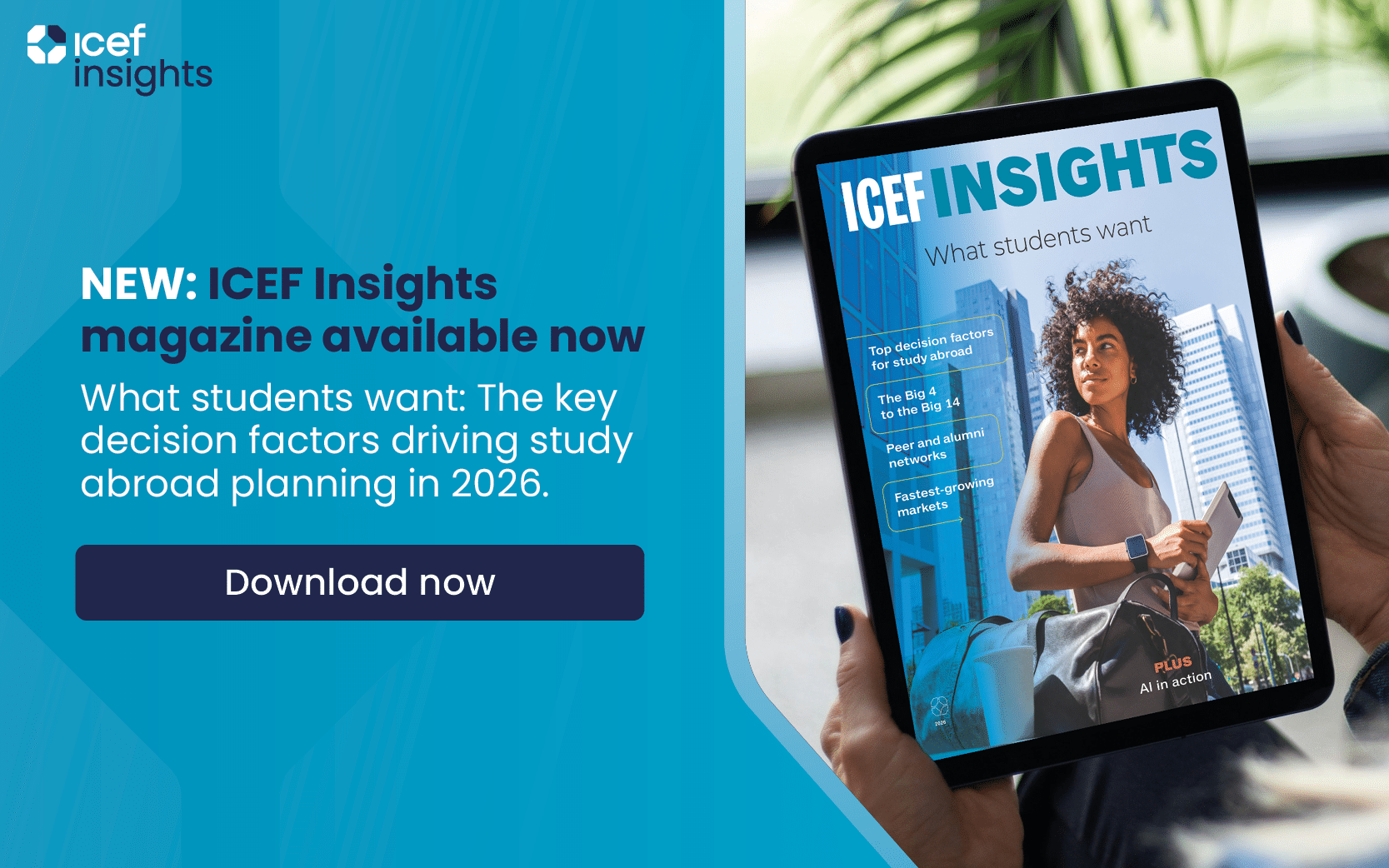
From the Big Four to the Big Fourteen




The following article is adapted from the 2026 edition of ICEF Insights magazine, which is freely available to download now.

Over the past few years, it has become more difficult for many students in emerging markets to study in Big Four destinations (i.e., Australia, Canada, the UK, and the US).
In response to greater levels of public concern about immigration, governments in Australia, Canada, and the UK have launched measures such as caps on new enrolments; higher financial requirements and visa application fees; a narrower band of post-study work opportunities; stricter rules around accompanying family members; higher compliance standards for institutions hosting foreign students; and more. In the US, the Trump administration’s explicit actions towards both illegal and legal immigrants (including arrests, detentions, and deportations) is enough to depress demand from students who might previously have wanted to study there.
Meanwhile, it has become easier – and more compelling – for international students to study in a growing list of countries in Asia, Europe, and the Middle East.
Demographic and economic goals
Emerging – and some established – destinations outside the Big Four have their reasons
for encouraging inbound student mobility, from a need to counter the effects of ageing populations to a desire for better economic competitiveness and influence in key regions. Any or all these reasons are reflected in some of the enrolment targets we see in a growing list of countries.

Open doors are encouraging
Many of the fastest-growing destinations are the most affordable in terms of tuition fees and living costs. Some – especially in Asia – are both affordable and home to top-ranked universities, a combination that explains why there are eight Asian cities in the top 20 in QS’s 2026 Top Student Cities ranking.
But there is also an emotional aspect underlying the new popularity of of alternative destinations. Students want to feel welcome and wanted in the country in which they choose to study abroad. Over the course of 2025, in conversations with top agents around the world, we have heard that several factors are making Big Four destinations feel less welcoming than in the past. These include:
- Visa application processes
- Visa requirements (e.g., around finances, dependants, language, etc.)
- Application fee increases
- Delays in visa decisions
- Visa rejection rates
- Unpredictable visa outcomes
- Frequently changing immigration rules
Visa-related challenges can feel very personal. Imagine you are a student in West Africa. You know that approval rates in Big Four destinations are relatively low but it’s been your dream since childhood, and so you persevere. With your good grades, sufficient finances, strong language proficiency, and impressive extra-curricular activities, you apply. So does your friend. You wait three months for a decision, then get rejected. Your friend, with virtually the same strengths as you, hears in six weeks that she has been approved. You are given no reason – or a weak reason – for your rejection, and you cannot see why you weren’t approved given that your profile is almost identical to your friend’s. You cannot help but feel hurt.
This sort of case is also upsetting for agents. Agents take pride in knowing which students are best fits for certain institutions and which destinations are the best match for particular students. If agents encounter persistently high levels of refusals and hurdles, not only do they feel the disappointment of individual students. They also worry that the pattern could cause stakeholders such as parents and local schools to lose faith in their abilities.
Meanwhile, both students and agents are increasingly aware of emerging destinations that are offering quality education at a low cost; asking for minimal paperwork; sweetening the pot with career supports and scholarships; and processing and approving visas quickly. As such, these destinations have become significantly more compelling – and rewarding – to apply to.
Did you know?
- The number of Asian students choosing to study within their region between 2016 and 2022 rose by 40%.
- China has introduced a flexible new “K-Visa” to attract the world’s best STEM students and graduates.
- Hong Kong will allow 50% of its students to be non-local, up from 40% in 2024 and 20% before that.
- Germany’s goals include seeing international students compose 15% of the student body
and raising success rates of foreign students. - France has expanded its scholarships, grants, and exemptions, especially for students from Africa.
- The Moroccan Agency for International Cooperation (AMCI) offers full scholarships to students from dozens of African, Asian, Caribbean, and Pacific countries.
For additional background, please see: