


Asian destinations show their strength in latest ranking of student cities




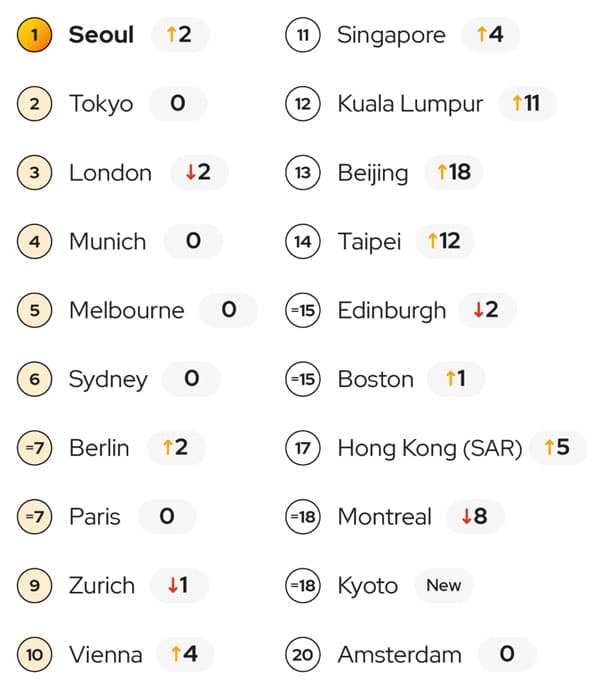
- For the first time ever, Seoul has taken the top spot in a global ranking of top student cities
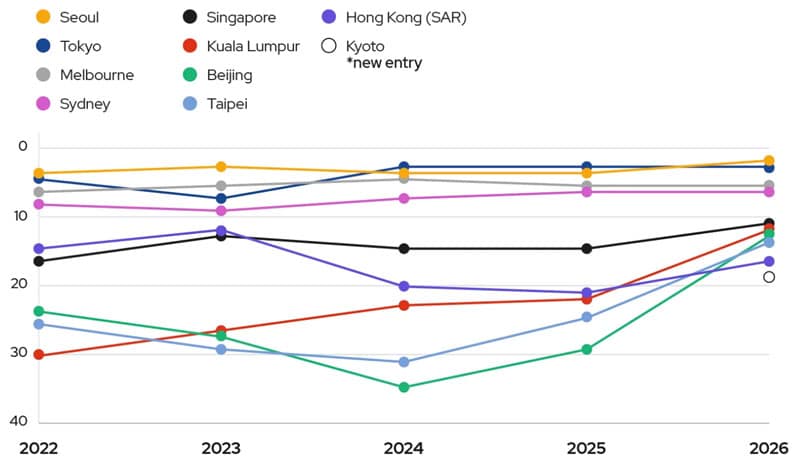
- Ten of the top 20 ranked cities are now in the Asia Pacific, including Taipei, which enters the top 20 for the for the first time this year
- That movement up the table reflects the calibre of higher education institutions in each city as well as the growing student population in each and the relative affordability of destinations in Asia
The QS Best Student Cities 2026 rankings were released last month, and, for the first time ever, Seoul has taken the title as the world's best city destination. The Korean capital's move up the table brings an end to London's six-year run in the top spot, and it reflects a broader pattern of increasing representation and improving positions of Asian cities in the top 20.
South Korea's Deputy Prime Minister and Minister of Education Ju-Ho Lee said: "We are proud that Seoul has been recognised as the best student city in the world. This achievement reflects the global confidence in Korea's higher education system and highlights Seoul's ability to blend academic excellence with vibrant culture, cutting-edge innovation, and a safe, welcoming environment."
The QS ranking evaluates 150 cities across 58 countries and territories. The US and UK are the most represented, with 16 cities each, and, historically, cities in those two leading study destinations, along with those in Europe, have dominated the table.
Not so in 2026, however. Joining top-ranked Seoul are Tokyo (#2), Singapore (#11), Kuala Lumpur (#12), Beijing (#13), Taipei (#14), and Hong Kong (#17). Beijing and Taipei were the biggest movers at the top of the table, gaining 18 and 12 spots respectively since the 2025 ranking and entering the top 20 for the first time.
"There has been significant movement among the top 20 cities," says QS. "Now, 10 of the top 20 cities are in Asia Pacific, highlighting the region’s increased influence on global higher education." As we see in the following chart, that total includes long-standing, high-profile destinations in the region, such as Melbourne and Sydney, but we also see rapid gains for other major centres, notably Taipei and Beijing. That movement up the ranking table reflects the strength of the higher education institutions in each city, but also that a number of these destinations are also scoring higher in the QS ranking for factors such as "student mix" (which reflects the proportion of the student population in each city compared to total population) and affordability.
On the important question of cost, QS adds that, "While the top cities excel in many of our indicators, affordability is a persistent challenge. Low affordability may lead to international students looking outside the big four destinations or staying in their home country. London’s declining affordability was a significant driver in it losing its top spot." A related comment from Global Student Living echoes the point, noting that, "The cost of living in London remains a growing concern for prospective students. While the city continues to offer a wealth of academic and professional opportunities, rising rent, transport, and living costs have lessened its appeal relative to more affordable alternatives."
The 2026 city rankings also reflect the growing strength – and ambition – of study destinations across Asia. Japan, for example hosted more than 336,000 students in 2024, growing 21% from the year before. South Korea's foreign student population reached 208,000 in 2023 (24% growth year-over-year) against a national goal to attract 300,000 students by 2027. Taiwan welcomed 125,000 visiting students in 2024 but wants to reach 320,000 by 2030, and Malaysia aims to host 250,000 students as of this year.
For additional background, please see:







