


Enrolment surges in Spain’s language teaching sector




- Both student numbers and student weeks reached record-high points in Spanish language schools last year, following significant year-over-year growth in both 2023 and 2024
Enrolment in Spanish language schools in Spain has now surged past pre-pandemic levels. The post-COVID recovery really took hold in 2022, at which point student numbers had rebounded by 80% year-over-year. But now the latest enrolment data from FEDELE (Federación Española de Escuelas de Español como Lengua Extranjera) reveals that numbers have surged in the two years since.
As we see in the chart below, enrolment in Spanish language schools grew by just under 40% between 2022 and 2024 to reach a record high of 153,285 students last year.
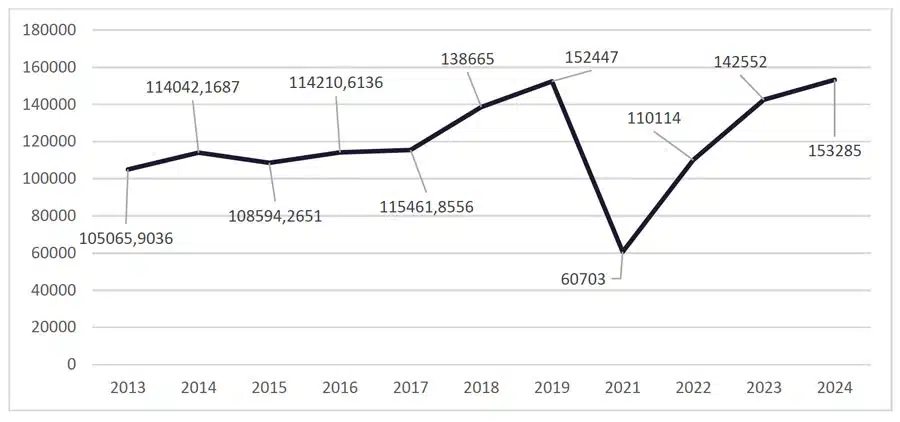
Even more strikingly, student-week volumes grew by more than 60% over that same period to reach nearly 710,000 weeks in total – a mark that is 36% above the pre-pandemic high point.

"All the effects caused by the COVID-19 pandemic can be considered overcome," notes the FEDELE report. "And record numbers are also achieved with an average of 1,394 students per [FEDELE member school]."
Who are you?
That 2024 enrolment base is divided roughly equally between individual students (48%) and those travelling as part of school groups (52%) – a proportion that aligns closely with pre-pandemic patterns. Most students are between 12 and 18 years old (31%), followed by the 19-to-25-year-old cohort (25%), and then the broader 26-to-45-year-old group (24%).
The largest proportion of students were enrolled in language courses combined with cultural activities in 2024 (36%), with the next most-popular option being programmers for juniors or summer camps (20%).
The major sending markets for Spain's language sector in 2024 were:
- Germany
- Italy
- France
- United States
- United Kingdom
- Poland
- Netherlands
- Russia
- Austria
- Morocco
Overall for 2024, three in four students arrived from Europe, with another 10% coming from North America and 9% from Asia.
An expanding economic footprint but challenges remain
FEDELE estimates the direct economic impact of member schools at €520,120,185 for 2024, or an average of €4 million per school.
Even with that impressive growth and impact in 2024, the FEDELE report sounds a cautionary note as well, adding that: "Although the growth is notable and indicates that the sector is in good health, we believe that some issues, such as visa-related problems, have been a stumbling block for student entry. Furthermore, we are observing the return of digital nomads to their countries of origin and the stagnation of some European Union economies. The price of accommodation also appears to have had a negative influence on the number of students enrolled at our centres."
For additional background, please see:
Most Recent
-
Decline in Indian demand a major factor in softer outlook for foreign enrolment in US higher education in 2026/27 Read More

-
Australia: As visa applications from foreign students fall, the government has set the national target for new international students in 2027 Read More
-
Independent K-12 schools in the UK hosting fewer international students this year Read More







