


Internationalisation agenda for universities remains focused on student recruitment




- Nearly all respondents to a recent survey of international education leaders in Australia, Canada, and the UK say that international student recruitment remains their top priority
- Agents will continue to play a key role in those recruitment goals but university leaders are placing a greater emphasis on professionalising the role of education agents
- Most respondents also expect more intense competition for students going forward
A survey of more than 100 international education leaders in Australia, Canada, and the UK, finds that internationalisation – and student recruitment in particular – remains a top priority. The study was conducted jointly by management consultancy Nous Group and Navitas. And those educational leaders, whose roles typically included "Deputy Vice Chancellor (International), Pro Vice Chancellor (International), Vice President (International) and Director (International)", responded to the survey between August and November 2022.
The study finds that for most of those respondents, "Internationalisation is synonymous with international student recruitment," with 96% rating recruitment as extremely or very important. As we see in the following charts, the next closest priority (at 58%) was international partnerships.

“Internationalisation strategies have become more complex in recent years," said Nous Principal Matt Durnin. “Today, internationalisation includes affiliations and partnerships, transnational education and offshore brand campuses, however, international student recruitment is still the most important area of focus for university leaders due to its pivotal role in revenue generation.”
In weighing out related findings with respect to institutional priorities around international revenue, volume of students, and diversity, the study report offers two important cautions for institutional leaders.
- "Universities must find the right balance of volume versus revenue: In a hypercompetitive environment, there is a risk that the cost of recruiting students rises substantially, leading to increased volume without the revenue returns."
- "Universities must ensure appropriate focus across volume, revenue, quality, and diversity. There are real risks to retention, student experience, and student outcomes when volume and revenue come at the expense of student quality and diversity."
Agents will continue to play a prominent role
The report adds that, "Reliance on traditional agents increased during the pandemic to compensate for travel restrictions that prevented recruitment staff from making face-to-face visits to key markets. Agents continue to be a core strategic relationship for many universities seeking to increase international enrolments, particularly to support entry into new markets and meet growth targets in the face of increased competition."
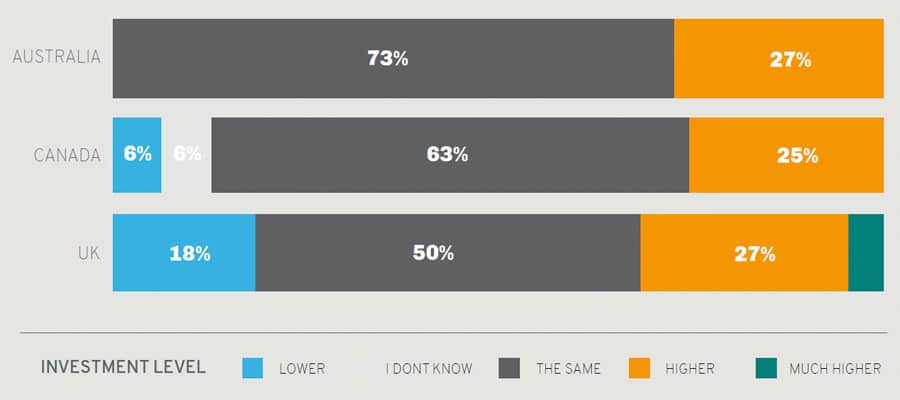
The survey results indicate, however, that planned institutional spending on agent commissions and incentives appears to be stabilising, with only one in four respondent expecting to increase their investment in this area.
The authors suggest that this may be due to a growing emphasis on quality assurance frameworks, training, and other best practices for professionalising the role of agents "rather than using commission rates as a blunt instrument to drive enrolment growth."
A more competitive marketplace
Nearly all survey respondents said that they expected the sector is entering a period of more intense competition.
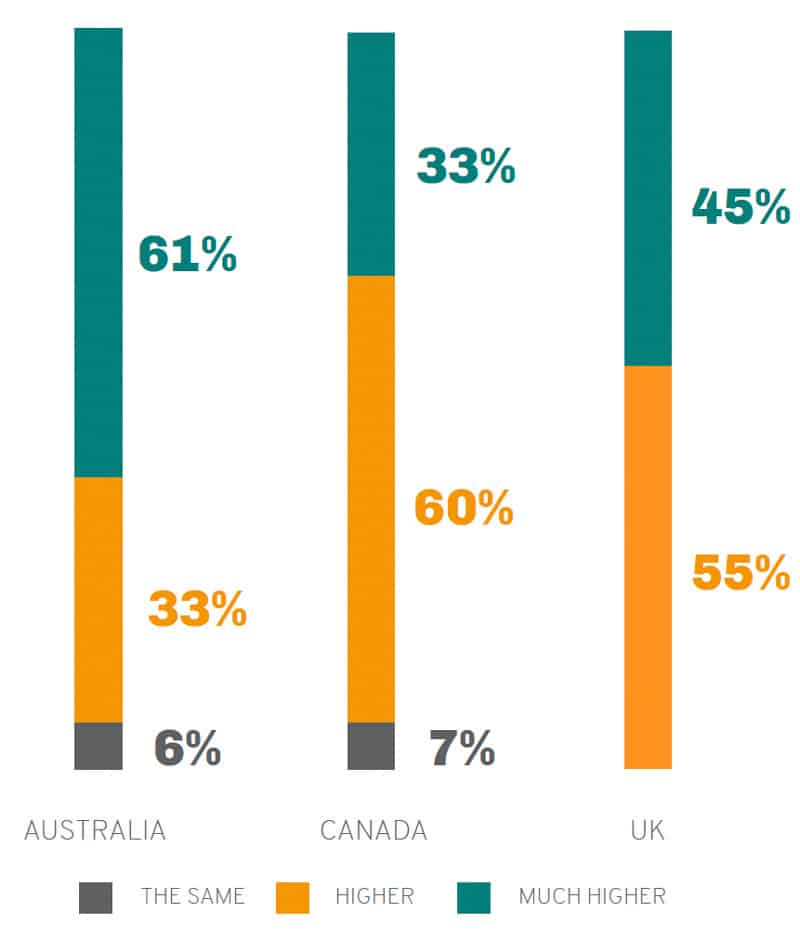
“While there may be lingering global uncertainty and a relatively high level of risk in the macro-economic environment, our research shows university leaders are optimistic and hungry to recover losses brought about by the pandemic," added Mr Durnin. "To achieve their internationalisation agendas, universities will need to ensure they have the right governance, planning and capability in place alongside their appetite to invest."
For additional background, please see:
Most Recent
-
Decline in Indian demand a major factor in softer outlook for foreign enrolment in US higher education in 2026/27 Read More

-
Australia: As visa applications from foreign students fall, the government has set the national target for new international students in 2027 Read More
-
Independent K-12 schools in the UK hosting fewer international students this year Read More







