

US passes bill requiring accreditation of colleges with foreign students




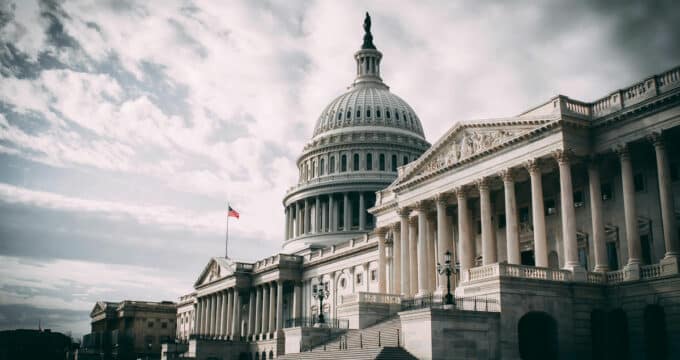
Acting to close a major loophole in the student-visa system, The Chronicle of Higher Education has reported that the US House of Representatives has approved legislation requiring US colleges and universities that enrol foreign students and issue I-20′s to be accredited. By a voice vote conducted last week, lawmakers passed a bill, H.R. 3120, that would require all higher education institutions that enrol 25 or more students on non-immigrant visas to have national or regional accreditation recognised by the US Department of Education. If approved by the US Senate, the measure would eliminate a significant shortcoming in visa law, passed in the wake of the 2001 terrorist attacks, that has allowed fraudulent universities to take in thousands of foreign students and essentially sell them the right to work in the United States. Senator Chuck Grassley stated, “This is a national security matter. Foreign student visas were issued to terrorists who attacked the United States both in 1993 and on September 11."
“The accreditation requirements instituted by this bill will prevent illegitimate institutions from cheating foreign students who legitimately seek a bona fide education in the United States,” Representative Zoe Lofgren said on the House floor. “In addition, this requirement will prevent fly-by-night institutions from engaging in student-visa fraud to smuggle or traffic persons into the country.”
The US Department of Homeland Security has been conducting investigations following the now infamous case of California's Tri-Valley University - a bogus institution that enroled over 1,500 foreign students. Recently, the US Government Accountability Office (GAO) released a report outlining the results of its investigation into Student and Exchange Visitor Program (SEVP) vulnerabilities. The GAO report found that US Immigration and Customs Enforcement - which oversees the student visa system - has inadequate processes in place to investigate, identify and combat fraud, and has not done enough to ensure that the 10,000 schools and colleges that enroled a total of 850,000 foreign students as of January have done so legitimately. Approximately 1,250 of the 10,000 schools do not have regional or national certification, according to the GAO report. The report further discovered that as of March 2012, SEVP only re-certified 19% of the schools and colleges that participate in the programme. It was supposed to have re-certified institutions by 2004 and every two years thereafter. But SEVP officials did not start the process until two years ago. During a recent Senate hearing, John P. Woods, assistant director of the Homeland Security Department's national-security investigations division, admitted SEVP had a long way to go toward checking all the 10,000 institutions in the system. He said SEVP did not have adequate funds for the re-certification effort to meet the original deadline. Since 2009, it has hired additional employees who are re-certifying schools at a pace of 350 to 400 a month. The agency has now re-certified 32% of the schools and colleges in the programme, but it could take another two years to check all of them, he said.
Next steps
If the bill becomes law, colleges will have a three-year window to meet the new accreditation requirement, although the secretary of the US Department of Homeland Security would have the authority to waive the mandate if an institution is found to be making a good-faith effort to earn accreditation and is otherwise in compliance with visa rules. Seminaries and other religious education institutions would be exempt from the accreditation provision. The law would provide for several measures:
- it would prohibit anyone convicted of an immigration violation, including visa fraud or human trafficking, from being in a position of authority at a college approved to participate in the visa system or from having oversight of international student records;
- it would require that unaccredited schools and colleges in the visa system be visited by federal investigators annually;
- and it would ensure that academic institutions enroling international students are certified by their home states.
Victor C. Johnson, senior adviser for public policy at NAFSA: Association of International Educators, called the legislation a “responsible” and “appropriate” response to the problems that have beset the student visa system, while providing the homeland security secretary with some discretion. Currently, only independent English-language programmes are required to hold accreditation in order to enrol foreign students, a law that the language schools themselves pushed for in order to weed out bad actors. In May, ICEF Monitor reported that the US Department of Homeland Security was planning to require university-run English language programmes to apply for separate specialised accreditation or lose their ability to enrol students from abroad. Now, it's clear that the US is taking active measures to stamp out visa fraud, secure the nation's borders and protect America's reputation as a high quality study destination. Source: The Chronicle of Higher Education