Nearly two-thirds of US colleges now working with agents




- More than six in ten US colleges are now working with education agents
- Education agents, meanwhile, say that student preference and US career opportunities are among their top reasons for recruiting for the US
- Agents also note that costs of study in the US and visa issues remain major challenges this year
A 2016 survey of US colleges and universities found that about four in ten (37%) were working with commission-based education agencies at the time. A similar survey from 2021 put the proportion at just under half (49%). And now, a little more than a year later, a new survey of US colleges finds that 62% of respondents are actively engaged with agents. Of those that aren’t already working with agents, nearly all (98%) say they are considering partnering with agents in the future.
“This is a sector-wide shift," says BONARD's Chief Intelligence Officer, Patrik Pavlacic. "And it will be interesting to monitor the situation in the immediate future, as the sector moves on from the pandemic crisis and study destinations globally compete aggressively for student recruitment.”
That latest study, The State of The International Student Recruitment and Enrollment Field Survey, was released today by The American International Recruitment Council (AIRC) and industry research specialists BONARD, with the support of the National Association for College Admission Counseling (NACAC) and the Association of International Education Administrators (AIEA).
The study gathered responses from roughly 200 US colleges and 100 education agencies in order to provide a multi-perspective view of the state of international student recruitment in the US.
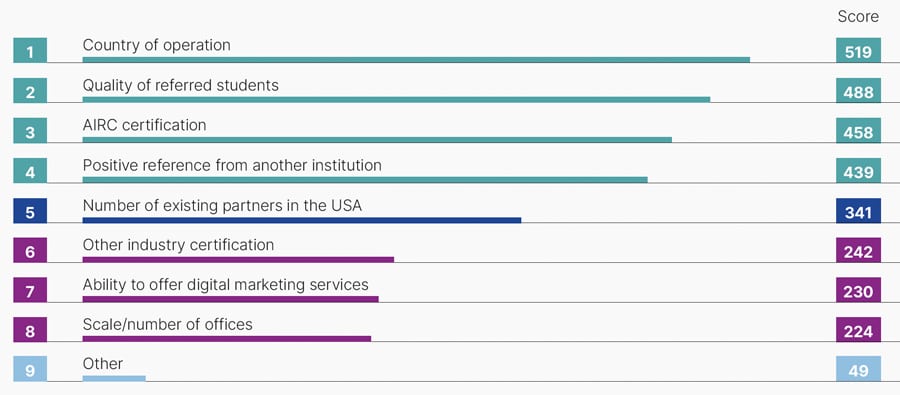
Educator-respondents reported weighing a number of factors when vetting a new education agent, including the market where the potential partner is based, quality of students referred, and external certifications or reference checks.
Most indicated a preference for agent compensation based on a fixed post-enrolment per capita fee (63%), as opposed to a commission based on a percentage of either gross (17%) or net (17%) tuition.
How institutions are approaching recruitment
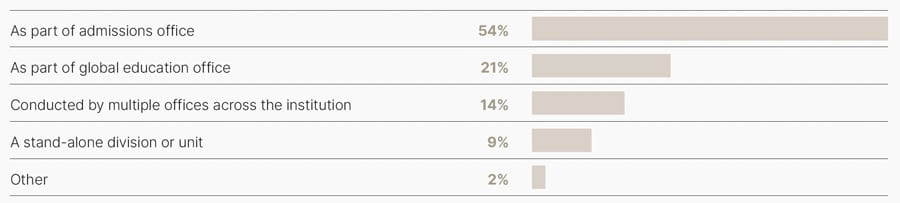
Just over half of responding colleges (54%) say that international recruitment at their institutions is organised and carried out within their admissions office. As we see in the table below, others rely on recruitment staff within their international offices, or as carried out by multiple operating units across the institutions.
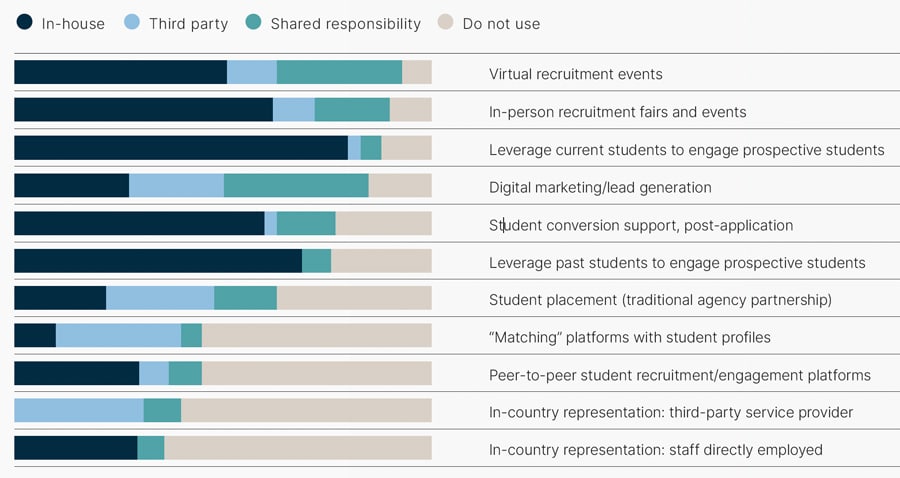
The survey also finds that US colleges are recruiting across a wide range of channels, with virtual events still the most prominent (93%), followed narrowly by in-person events for nine in ten respondents.
The agent's perspective
Agent-respondents to this year's survey say that market demand/student preference (54%), along with US career opportunities (18%), and "increasing the number and variety of institutions we serve" (18%) are their main reasons for recruiting for US institutions.
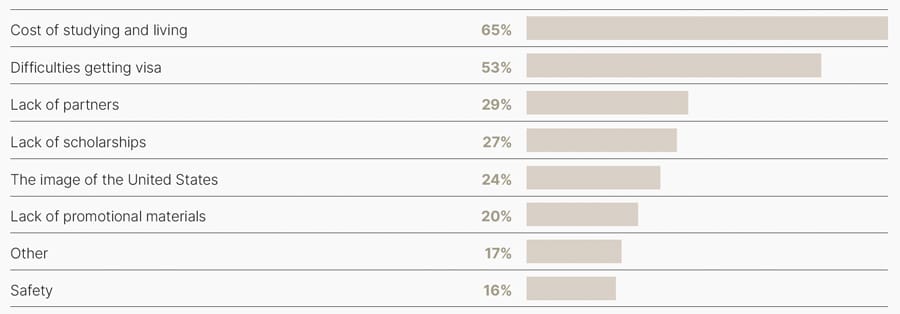
Responding agents also reported a number of challenges in recruiting to the US, including costs (65%) and visa issues (53%). An accompanying statement from AIRC/BONARD adds that, "Crucially, almost a third of educational agencies (29%) report not having enough partners in the US, which indicates there is scope for further partnership-building opportunities."
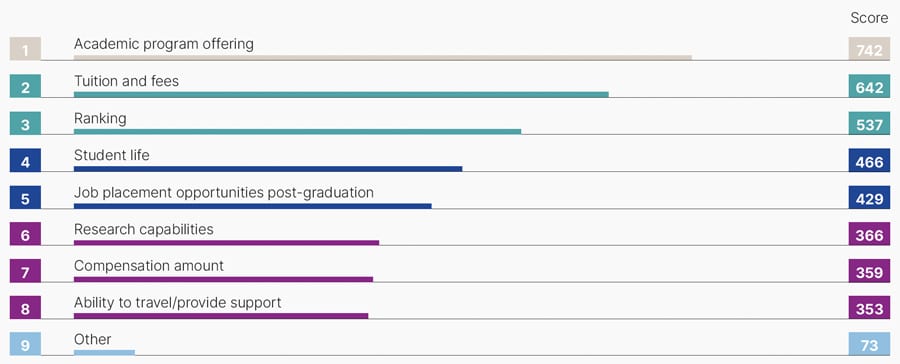
To that point of building new agent-educator relationships, the survey report adds that agents prioritise the programmes offered by a potential institutional partner, followed by considerations of cost, ranking, student life, and career supports/graduate outcomes. "Overall, the survey reveals that educational agencies place the highest importance on how their partner institutions benefit their student clients," adds the report.
For additional background, please see:
Most Recent
-
Breaking: US Department of Homeland Security publishes rule to end Duration of Status for international students Read More

-
Joint sector alert sends a clear compliance message to Australian higher education and VET providers Read More
-
Academic support and learning resources in TNE: Delivering student success across borders Read More