


Nigerian demand surging but real challenges remain in visa processing and international payments




- Agents are reporting very strong demand from Nigerian students and families this year
- Even with impressive outbound numbers, the student market is being hindered this year by visa processing backlogs for major study destinations and by limited access to foreign exchange via the central bank
"Nigeria is a very big market in terms of the study abroad business," says Obianuju Akpo-Edewor, general manager of the Lagos-based agency Michael Ralph Consult. "You have parents that are ready to pay the money. Now, the challenges are being able to get visas for their children to go to their country of choice." She added that the UK has an advantage currently due to "easier visa processing", compared to other traditional leading destinations such as the United States and Canada.
Speaking at the recent ICEF Africa event, Ms Akpo-Edewor explained that Nigerians are also facing another important hurdle this year in that access to foreign exchange is currently limited. "Students are struggling to get forex to pay their fees. There are long queues at the bank because our forex policy is controlled entirely by the Central Bank of Nigeria. So for a student to get school fees paid, you need to go through the Central Bank of Nigeria and as we speak there is a lack of forex."
A recent report from the think tank and advocacy platform African Liberty explains the current situation as, "There is excess demand for dollars against the naira to import products (such as petrol, gas, power sources, and automobiles) and [pay for] foreign services (such as school fees, medical services, foreign holidays, and foreign loans)."
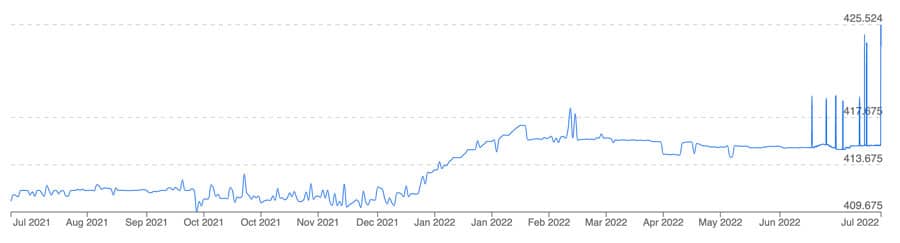
Part of that demand is being met by the so-called parallel market – that is, a black market for foreign exchange trading outside of official CBN channels. But the cost of foreign currency has been rising this year in both official and unofficial markets, due to surging demand from Nigerian families and businesses alongside a significant devaluation of the Nigerian naira this year.
Tight controls from the central bank
As in many countries around the world, inflation is also playing an important part in the Nigerian economy this year, rising above forecasts to reach nearly 18% in May 2022. The government, and the central bank, are moving to counter the threat of inflation with higher interest rates. Unlike many other economies around the world, however, the Central Bank of Nigeria also plays an outsized role with respect to exchange rates and access to foreign currency. There are times, for example, where the central bank simply cuts off the supply of foreign currency to other exchange outlets within Nigeria. This further fuels demand for forex in the black market, as a recent item from the Vanguard newspaper explains:
"One of the major causes of the double digit inflation experienced by Nigerians in 2021, is the sharp depreciation of the Naira in the parallel market, where most businesses and individuals depend for the foreign exchange needs in 2021.
While the naira depreciated marginally by 1.1% in the official Investors and Exporters (I&E) window, where the exchange rate rose to N415.10 per dollar from N410.25 per dollar at the beginning of the year, the naira depreciated by 22.8% in the parallel market.
The sharp depreciation of the naira in the parallel market was driven by increased demand amidst low dollar supply, a situation worsened by the July 27 decision of the Central Bank of Nigeria to stop dollar sales to Bureaux De Change (BDCs)."
The bank's heavy hand with respect to the forex supply is informed in part by the government's interest in propping up the value of the naira -- in that sense, inflation, interest rates, exchange rates, and access to foreign currency are all strongly intertwined elements of the Nigerian economy.
As African Liberty explains, "Nigeria’s external [foreign currency] reserve is usually used as a backup for the international value of the naira, and it is constantly under pressure because of the volatility and uncertainty of crude oil prices, which is a significant FX earner for the country. The West African country is also dealing with high government indebtedness, which weakens the naira."
A large and complex market
Even so, demand for study abroad remains strong and is strengthening further this year. There are not nearly enough seats in Nigerian universities to keep pace with demand, and rising security concerns at home -- some political, others related to ongoing strikes and labour disruptions – are further motivating parents to enrol their students abroad.
Indeed, Nigeria remains one of the largest and fastest-growing markets for outbound students on the continent. UNESCO reported that 70,000-80,000 Nigerians were going abroad for higher education annually in the years leading up to the pandemic. But this number also certainly undercounts the numbers of students moving to neighbouring countries in Africa, such as Ghana.
Adedamola Oloketuyi is the director of AOC Schengen, a Germany-based agency focused on advising Nigerian students on study in Europe. Also on the panel at ICEF Africa, he reflected on the scale and complexity of the Nigerian market: "Nigeria has more than 80 million youth but very few universities to cater to them. Nigerian students have a culture of going abroad for study, not just because of the education but because of the opportunities [they can find abroad] as well. The advice for any school [recruiting in Nigeria] is you have to know your target market." The country is remarkably different from region to region he adds, and even from tribe to tribe. "There is a market for everybody, it just depends on who you are targeting."
For additional background, please see:
Most Recent
-
China in 2026: Slowing outbound student mobility, accelerating inbound momentum Read More

-
Surprise hike in international student visa application fees “a direct hit to Australia’s competitiveness” Read More
-
ICEF Podcast: “Good, steady, and disciplined”: New Zealand’s plan for sustainable international enrolment growth Read More







